Friday, February 24, 2017

Week 21 Overview

In 1963, the Arab League decided to introduce a new weapon in its war against Israel — the Palestine Liberation Organization (PLO). The PLO formally came into being during a 1964 meeting of the first Palestinian Congress. Shortly thereafter, the group began to splinter into various factions. Ultimately, the largest faction, Fatah, would come to dominate the organization, and its leader, Yasser Arafat, would become the PLO chairman and most visible symbol. All the groups adhered to a set of principles laid out in the Palestine National Charter, which called for Israel's destruction. The PLO’s belligerent rhetoric was matched by deeds. Terrorist attacks by the group grew more frequent. In 1965, 35 raids were conducted against Israel. In 1966, the number increased to 41. In just the first four months of 1967, 37 attacks were launched. The targets were always civilians.
Most of the attacks involved Palestinian guerillas infiltrating Israel from Jordan, the Gaza Strip, and Lebanon. The orders and logistical support for the attacks were coming, however, from Cairo and Damascus. Egyptian President Nasser’s main objective was to harass the Israelis, but a secondary one was to undermine King Hussein’s regime in Jordan. King Hussein viewed the PLO as both a direct and indirect threat to his power. Hussein feared that the PLO might try to depose him with Nasser’s help or that the PLO’s attacks on Israel would provoke retaliatory strikes by Israeli forces that could weaken his authority. By the beginning of 1967, Hussein had closed the PLO’s offices in Jerusalem, arrested many of the group’s members, and withdrew recognition of the organization. Nasser and his friends in the region unleashed a torrent of criticism on Hussein for betraying the Arab cause.

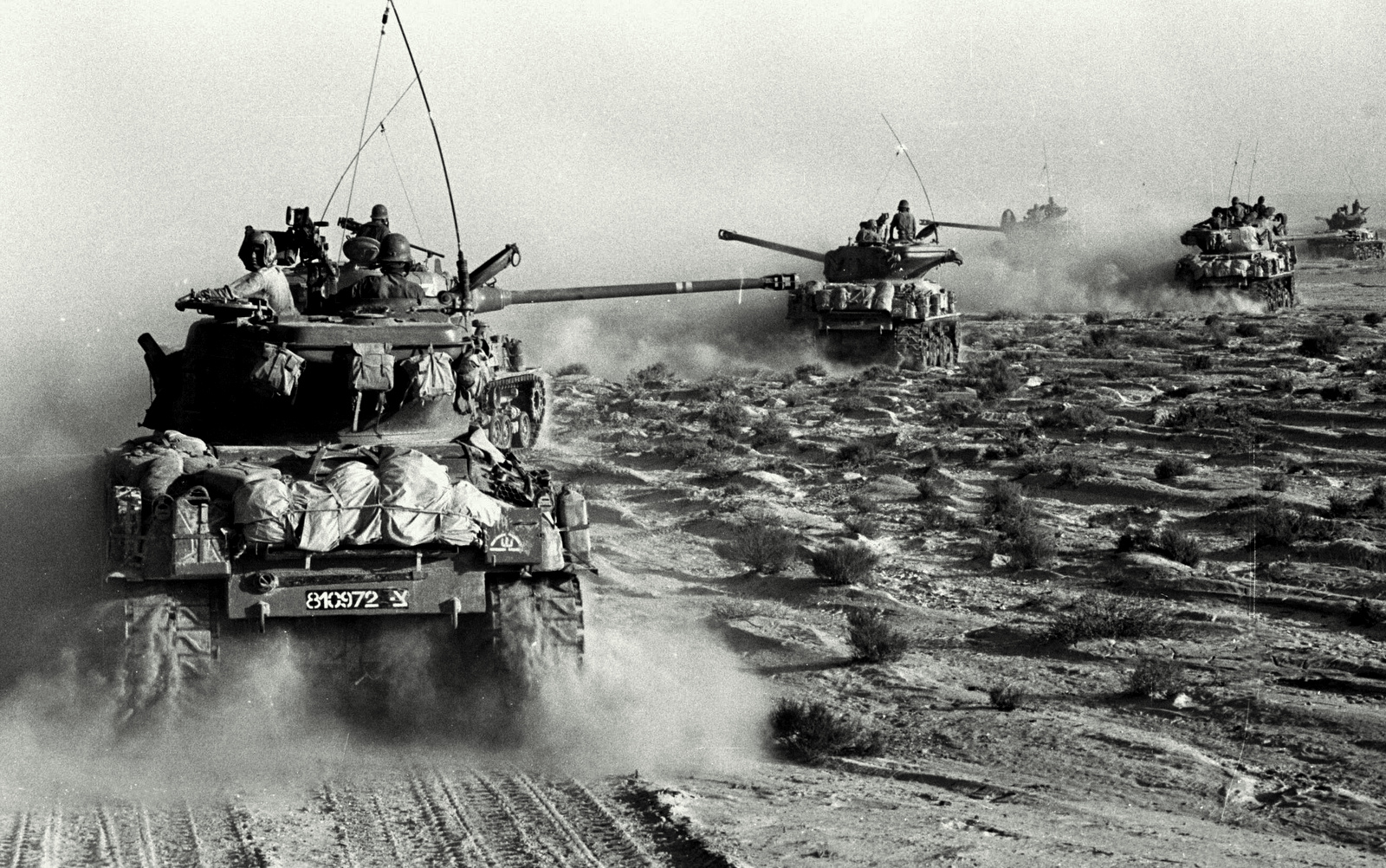
Hussein would soon have the chance to redeem himself. The breakup of the U.A.R. and the resulting political instability only made Syria more hostile toward Israel. Another major cause of conflict was Syria’s resistance to Israel’s creation of a National Water Carrier to take water from the Jordan River to supply the country. The Syrian army used the Golan Heights, which tower 3,000 feet above the Galilee, to shell Israeli farms and villages. Syria’s attacks grew more frequent in 1965 and 1966, forcing children living on kibbutzim in the Huleh Valley to sleep in bomb shelters. Israel repeatedly protested the Syrian bombardments to the UN Mixed Armistice Commission, which was charged with policing the cease‐fire, but the UN did nothing to stop Syria’s aggression — even a mild Security Council resolution expressing “regret” for such incidents was vetoed by the Soviet Union. Meanwhile, Israel was condemned by the United Nations when it retaliated. While the Syrian military bombardment and terrorist attacks intensified, Nasser’s rhetoric became increasingly bellicose. In 1965, he announced, “We shall not enter Palestine with its soil covered in sand; we shall enter it with its soil saturated in blood.” Again, a few months later, Nasser expressed the Arabs’ aspiration: “the full restoration of the rights of the Palestinian people. In other words, we aim at the destruction of the state of Israel. The immediate aim: perfection of Arab military might. The national aim: the eradication of Israel.” Syria’s attacks on Israeli kibbutzim from the Golan Heights finally provoked a retaliatory strike on April 7, 1967. During the attack, Israeli planes shot down six Syrian fighter planes — MiGs supplied by the Soviet Union. Shortly thereafter, the Soviets — who had been providing military and economic assistance to both Syria and Egypt — gave Damascus false information alleging a massive Israeli military buildup in preparation for an attack. Despite Israeli denials, Syria decided to invoke its defense treaty with Egypt and asked Nasser to come to its aid. On May 15, Israel's Independence Day, Egyptian troops began moving into the Sinai and massing near the Israeli border. By May 18, Syrian troops were prepared for battle along the Golan Heights. Nasser ordered the UN Emergency Force (UNEF), stationed in the Sinai since 1956 as a buffer between Israeli and Egyptian forces after Israel’s withdrawal following the Sinai Campaign, to withdraw on May 16. Without bringing the matter to the attention of the General Assembly (as his predecessor had promised), Secretary‐General U Thant complied with the demand. After the withdrawal of the UNEF, the Voice of the Arabs radio station proclaimed on May 18, 1967:”As of today, there no longer exists an international emergency force to protect Israel. We shall exercise patience no more. We shall not complain any more to the UN about Israel. The sole method we shall apply against Israel is total war, which willresult in the extermination of Zionist existence.” An enthusiastic echo was heard May 20 from Syrian Defense Minister Hafez Assad: “Our forces are now entirely ready not only to repulse the aggression, but to initiate the act of liberation itself, and to explode the Zionist presence in the Arab homeland. The Syrian army, with its finger on the trigger, is united....I, as a military man, believe that the time has come to enter into a battle of annihilation.” On May 22, Egypt closed the Straits of Tiran to all Israeli shipping and all ships bound for Eilat. This blockade cut off Israel's only supply route with Asia and stopped the flow of oil from its main supplier, Iran. In 1956, the United States gave Israel assurances that it recognized the Jewish State's right of access to the Straits of Tiran. In 1957, at the UN, 17 maritime powers declared that Israel had a right to transit the Strait. Moreover, the blockade violated the Convention on the Territorial Sea and Contiguous Zone, which was adopted by the UN Conference on the Law of the Sea on April 27, 1958. President Johnson expressed the belief that the blockade was illegal and unsuccessfully tried to organize an international flotilla to test it. At the same time, he advised the Israelis not to take any military action. After the war, he acknowledged the closure of the Strait of Tiran was the casus belli (June 19, 1967): If a single act of folly was more responsible for this explosion than any other it was the arbitrary and dangerous announced decision that the Strait of Tiran would be closed. The right of innocent maritime passage must be preserved for all nations. Nasser was aware of the pressure he was exerting to force Israel’s hand, and challenged Israel to fight almost daily. The day after the blockade was set up, he said defiantly: "The Jews threaten to make war. I reply: Welcome! We are ready for war." Nasser challenged Israel to fight almost daily. "Our basic objective will be the destruction of Israel. The Arab people want to fight," he said on May 27. The following day, he added: "We will not accept any...coexistence with Israel...Today the issue is not the establishment of peace between the Arab states and Israel....The war with Israel is in effect since 1948." King Hussein of Jordan signed a defense pact with Egypt on May 30. Nasser then announced: The armies of Egypt, Jordan, Syria and Lebanon are poised on the borders of Israel...to face the challenge, while standing behind us are the armies of Iraq, Algeria, Kuwait, Sudan and the whole Arab nation. This act will astound the world. Today they will know that the Arabs are arranged for battle, the critical hour has arrived. We have reached the stage of serious action and not declarations. President Abdur Rahman Aref of Iraq joined in the war of words: "The existence of Israel is an error which must be rectified. This is our opportunity to wipe out the ignominy which has been with us since 1948. Our goal is clear ‐‐ to wipe Israel off the map." On June 4, Iraq joined the military alliance with Egypt, Jordan and Syria. The Arab rhetoric was matched by the mobilization of Arab forces. Approximately 465,000 troops, more than 2,800 tanks, and 800 aircraft ringed Israel. By this time, Israeli forces had been on alert for three weeks. The country could not remain fully mobilized indefinitely, nor could it allow its sea lane through the Gulf of Aqaba to be interdicted. Israel decided to preempt the expected Arab attack. To do this successfully, Israel needed the element of surprise. Had it waited for an Arab invasion, Israel would have been at a potentially catastrophic disadvantage. On June 5, Prime Minister Eshkol gave the order to attack Egypt. The United States tried to prevent the war through negotiations, but it was not able to persuade Nasser or the other Arab states to cease their belligerent statements and actions. Still, right before the war, Johnson warned: "Israel will not be alone unless it decides to go alone." Then, when the war began, the State Department announced: "Our position is neutral in thought, word and deed." Moreover, while the Arabs were falsely accusing the United States of airlifting supplies to Israel, Johnson imposed an arms embargo on the region (France, Israel's other main arms supplier also embargoed arms to Israel). By contrast, the Soviets were supplying massive amounts of arms to the Arabs. Simultaneously, the armies of Kuwait, Algeria, Saudi Arabia and Iraq were contributing troops and arms to the Egyptian, Syrian and Jordanian fronts. On June 5, 1967, Israel was indeed alone, but its military commanders had conceived a brilliant war strategy. The entire Israeli Air Force, with the exception of just 12 fighters assigned to defend Israeli airspace, took off at 7:14 a.m. with the intent of bombing Egyptian airfields while the Egyptian pilots were eating breakfast. In less than 2 hours, roughly 300 Egyptian aircraft were destroyed. A few hours later, Israeli fighters attacked the Jordanian and Syrian air forces, as well as one airfield in Iraq. By the end of the first day, nearly the entire Egyptian and Jordanian air forces, and half the Syrians’, had been destroyed on the ground. The battle then moved to the ground, and some of history’s greatest tank battles were fought between Egyptian and Israeli armor in the blast‐furnace conditions of the Sinai desert. Prime Minister Levi Eshkol sent a message to King Hussein on June 5 saying Israel would not attack Jordan unless he initiated hostilities. When Jordanian radar picked up a cluster of planes flying from Egypt to Israel, and the Egyptians convinced Hussein the planes were theirs, he ordered the shelling of West Jerusalem. It turned out that the planes were Israel’s and were returning from destroying the Egyptian air force on the ground. It took only three days for Israeli forces to defeat the Jordanian legion. On the morning of June 7, the order was given to recapture the Old City. Israeli paratroopers stormed the city and secured it. Defense Minister Moshe Dayan arrived with Chief of Staff Yitzhak Rabin to formally mark the Jews’ return to their historic capital and their holiest site. At the Western Wall, the IDF’s chaplain, Rabbi Shlomo Goren, blew a shofar to celebrate the event. After Jordan launched its attack on June 5, approximately 325,000 Palestinians living in the West Bank fled to other parts of Jordan, primarily to avoid being caught in the cross‐fire of a war. A Palestinian refugee who was an administrator in a UNRWA camp in Jericho said Arab politicians had spread rumors in the camp. "They said all the young people would be killed. People heard on the radio that this is not the end, only the beginning, so they think maybe it will be a long war and they want to be in Jordan." Some Palestinians who left preferred to live in an Arab state rather than under Israeli military rule. Members of various PLO factions fled to avoid capture by the Israelis. Nils‐Göran Gussing, the person appointed by the UN Secretary‐General to investigate the situation, found that many Arabs also feared they would no longer be able to receive money from family members working abroad. Israeli forces ordered a handful of Palestinians to move for "strategic and security reasons." In some cases, they were allowed to return in a few days, in others; Israel offered to help them resettle elsewhere. The net result, however, was that a new refugee population had been created and the old refugee problem was made worse. While most IDF units were fighting the Egyptians and Jordanians, a small, heroic group of soldiers were left to defend the northern border against the Syrians. It was not until the Jordanians and Egyptians were subdued that reinforcements could be sent to the Golan Heights, where Syrian gunners commanding the strategic high ground made it exceedingly difficult and costly for Israeli forces to penetrate. Finally, on June 9, after two days of heavy air bombardment, Israeli forces succeeded in breaking through the Syrian lines. After just six days of fighting, Israeli forces were in a position to march on Cairo, Damascus, and Amman. By this time, the principal objectives of capturing the Sinai and the Golan Heights had been accomplished, and Israeli political leaders had no desire to fight in the Arab capitals. Furthermore, the Soviet Union had become increasingly alarmed by the Israeli advances and was threatening to intervene. At this point, U.S. Secretary of State Dean Rusk advised the Israelis “in the strongest possible terms” to accept a cease‐fire. On June 10, Israel did just that. The victory came at a very high cost. In storming the Golan Heights, Israel suffered 115 dead‐roughly the number of Americans killed during Operation Desert Storm. Altogether, Israel lost twice as many men — 777 dead and 2,586 wounded‐in proportion to hertotal population asthe U.S. lost in eight years of fighting in Vietnam. Also, despite the incredible success of the air campaign, the Israeli Air Force lost 46 of its 200 fighters.(24) The death toll on the Arab side was 15,000 Egyptians, 2,500 Syrians, and 800 Jordanians. By the end ofthe war, Israel had conquered enough territory to more than triple the size ofthe area it controlled, from 8,000 to 26,000 square miles. The victory enabled Israel to unify Jerusalem. Israeli forces had also captured the Sinai, Golan Heights, Gaza Strip and West Bank. Israel now ruled more than three‐quarters of a million Palestinians — most of whom were hostile to the government. Nevertheless, more than 9,000 Palestinian families were reunited in 1967. Ultimately, more than 60,000 Palestinians were allowed to return. In November 1967, the United Nations Security Council adopted Resolution 242, which established a formula for Arab‐Israeli peace whereby Israel would withdraw from territories occupied in the war in exchange for peace with its neighbors. This resolution has served as the basis for peace negotiations from that time on. Israel's leaders fully expected to negotiate a peace agreement with their neighbors that would involve some territorial compromise. Therefore, instead of annexing the West Bank, a military administration was created. No occupation is pleasant for the inhabitants, but the Israeli authorities did try to minimize the impact on the population. Don Peretz, a frequent writer on the situation of Arabs in Israel and a sharp critic of the Israeli government, visited the West Bank shortly after the Israeli troops had taken over. He found they were trying to restore normal life and prevent any incidents that might encourage the Arabs to leave their homes. Except for the requirement that school texts in the territories be purged of anti‐Israel and anti‐Semitic language, the authorities tried not to interfere with the inhabitants. They did provide economic assistance; for example, Palestinians in the Gaza Strip were moved from camps to new homes. This stimulated protests from Egypt, which had done nothing for the refugees when it controlled the area. Arabs were given freedom of movement. They were allowed to travel to and from Jordan. In 1972, elections were held in the West Bank. Women and non‐landowners, unable to participate under Jordanian rule, were now permitted to vote. East Jerusalem Arabs were given the option of retaining Jordanian citizenship or acquiring Israeli citizenship. They were recognized as residents of united Jerusalem and given the right to vote and run for the city council. Also, Islamic holy places were put in the care of a Muslim Council. Despite the Temple Mount's significance in Jewish history, Jews were barred from conducting prayers there.



Wednesday, February 15, 2017

Week 20: God Only Knows


Week 20: Introduction to the Cultural Revolution

Introduction to the Cultural Revolution

Stefanie Lamb

Excerpt from China's Cultural Revolution

The “Great Proletarian Cultural Revolution,” usually known simply as the Cultural Revolution (or the Great Cultural Revolution), was a “complex social upheaval that began as a struggle between Mao Zedong and other top party leaders for dominance of the Chinese Communist Party (CCP) and went on to affect all of China with its call for “continuing revolution.” 1 This social upheaval lasted from 1966 to 1976 and left deep scars upon Chinese society.

Background

The roots of the Cultural Revolution date back to the early 1960s. After the catastrophic Great Leap Forward, in which more than 20 million people died, Chairman Mao Zedong decided to take a less active role in governing the country. More practical, moderate leaders, such as Vice-Chairman Liu Shaoqi and Premier Zhou Enlai, introduced economic reforms based on individual incentives—such as allowing families to farm their own plots of land—in an effort to revive the battered economy. Mao detested such policies, as they went against the principles of pure communism in which he so firmly believed. Nevertheless, China’s economy grew strongly from 1962 to 1965 with the more conservative economic policies in place.

At the same time, Mao started to worry that local party officials were taking advantage of their positions to benefit themselves. Rather than resolving such cases internally to preserve the prestige of the CCP, Mao favored open criticism and the involvement of the people to expose and punish the members of the ruling class who disagreed with him; he framed this as a genuine socialist campaign involving the central struggle of the proletariat versus the bourgeoisie.

Buildup to the Cultural Revolution

Overall, Mao began to fear that the CCP was becoming too bureaucratic and that Party officials and planners were abandoning their commitment to the values of communism and revolution.2 Since the Great Leap Forward, he believed that he had been losing influence among his revolutionary comrades, and thus, the battle for China’s soul.

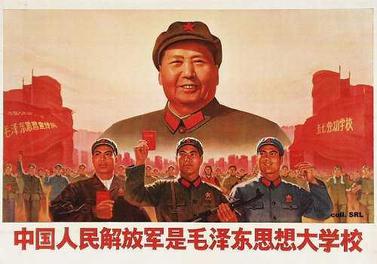
Some members of the Communist leadership argued for a new campaign of radicalism to overcome what they perceived as the stagnation of the country. Mao’s wife Jiang Qing and other officials argued that artistic and cultural works were beginning to criticize communism and should focus more on promoting a revolutionary spirit. Lin Biao, the head of the national army (called the People’s Liberation Army or PLA), was perhaps Mao’s strongest ally. Lin organized hundreds of Mao’s quotes into a book called Quotations from Chairman Mao, better known as the “Little Red Book.” Lin required every soldier to read the book and emphasized adherence to the Party line and loyalty to CCP leaders in the Army. Mao praised the PLA as an example for the Chinese people, and Mao’s status and image reached new heights when all Chinese began to study his book of quotations and memorize passages of the book; Mao became a prophet-figure in the minds of many Chinese.

The Beginning of the Cultural Revolution

When Jiang Qing and her allies complained in late 1965 that various cultural productions were openly criticizing the Communist leadership, Mao decided that China needed a new revolutionary movement. Beginning in May 1966, Jiang Qing’s allies purged key figures in the cultural bureaucracy and criticized writers of articles seen as critical of Mao.

That same month, the top party official in Beijing University’s Philosophy Department wrote a big character poster, or dazibao, attacking the administration of her university. Faculty at the country’s other universities soon began to do the same, and radicals among faculty and students began to criticize Party members. This wave of criticisms spread swiftly to high schools in Beijing. Radical members of the leadership, such as Jiang Qing, distributed armbands to squads of students and declared them to be “‘Red Guards—the front line of the new revolutionary upheaval.” 3

Mao endorsed the revolutionary discourse and the attacks on authority figures, whom he believed had grown complacent, bureaucratic, and anti-revolutionary. Local Red Guards attacked anyone whom they believed lacked revolutionary credentials, and then turned on those who simply failed to wholeheartedly support their efforts. In August 1966, the Central Committee issued a directive entitled the “Decision of the Central Committee of the Chinese Party Concerning the Great Proletarian Cultural Revolution” (a.k.a. the Sixteen Points) in an effort to define the revolution’s goals. Later that month, Mao began to greet huge parades of Red Guards holding aloft the “Little Red Book.”

However, despite official directives and encouragement from the Party leadership, local forces were left to act according to their own definitions, and many of them ended up inflicting violence upon their communities and clashing with each other. Nobody wanted to be considered a “reactionary,” but in the absence of official guidelines for identifying “true Communists,” everyone became a target of abuse. People tried to protect themselves by attacking friends and even their own families. The result was a bewildering series of attacks and counterattacks, factional fighting, unpredictable violence, and the breakdown of authority throughout China.

Some believe that this chaotic, violent response stemmed from the two decades of repression that the Party had imposed on China. Two particularly effective methods by which the CCP controlled the Chinese population were assigning class labels to each person, and giving the boss of each work unit nearly unlimited control over and knowledge of the lives of all the workers accountable to him or her. As a result, freedom of expression was denied, people were totally dependent on their bosses and were obliged to sacrifice and remain completely obedient to the Chinese nation, and only Party members exercised direct influence over their own lives. Thus, to the youth of the day, the Cultural Revolution represented a release from all their shackles, frustrations, and feelings of powerlessness. It also gave them the freedom to enact revenge on those whom they believed exercised undue influence over them or whom they had been told were “class enemies.”

Descent into Chaos

The chaos and violence increased in the autumn and winter of 1966, as schools and universities closed so that students could dedicate themselves to “revolutionary struggle.” They were encouraged to destroy the “Four Olds”—old customs, old habits, old culture, and old thinking—and in the process damaged many of China’s temples, valuable works of art, and buildings. They also began to verbally and physically attack authority figures in society, including their teachers, school administrators, Communist Party members, neighbors, and even their friends, relatives, and parents. At the same time, purges were carried out in the high ranks of the Communist Party.

On New Year’s Day 1967, many newspapers urged coalitions of workers and peasants to overthrow the entire class of decision-makers in the country. The Red Guards were instructed to treat the Cultural Revolution as a class struggle, in which “everything which does not fit the socialist system and proletarian dictatorship should be attacked.” 4 Radical revolutionary groups responded with fervor, attempting to gain control over local organizations. However, the end result was that local authorities and Party leaders were now dragged into the fighting that was quickly enveloping the rest of society. In the absence of coordination, rival “revolutionary units” fought Party leaders and each other, and the unending series of local power struggles multiplied even further.

Overall, the Red Guards and other groups of workers and peasants terrorized millions of Chinese during the 1966–1968 period. Intellectuals were beaten, committed suicide, or died of their injuries or privation. Thousands were imprisoned, and millions sent to work in the countryside to “reeducate” themselves by laboring among the peasants.

The breakdown of order reached its peak in the summer of 1967: opposing worker and student factions clashed throughout the country, with particularly intense violence in Beijing and Guangzhou, and massive fighting between local militant groups and the PLA in Wuhan led to the deaths of more than a thousand protestors. In perhaps the final straw, radicals assumed control of the Ministry of Foreign Affairs in August 1967 and began to appoint their own radical diplomats to Chinese embassies around the world.

Return to Order

At this point, most party leaders, including Zhou Enlai, Mao Zedong, Lin Biao, and Jiang Qing, agreed that the disorder was becoming too widespread to control and the country was in serious danger of falling into anarchy. They began to emphasize studying Mao’s works rather than attacking class enemies, used workers’ groups to control student groups, and generally championed the PLA while denouncing “ultra-left tendencies.” Nevertheless, armed clashes continued until the summer of 1968, when Mao called on troops to quell an uprising at Qinghua University in Beijing. Five people were killed and 149 wounded in the confrontation, including workers who were shot by students. After this final gasp of violence, a semblance of order returned to the country: “Revolutionary Committees” consisting of representatives from the PLA, “the masses,” and “correct” Communist Party cadres were established to decide on leadership positions and restore order.

Although its most chaotic phase had ended, the Cultural Revolution officially continued, and with it the unpredictable persecution of many Chinese. For example, the “Campaign to Purify Class Ranks,” which lasted from late 1967 until 1969, attempted to rid the Party of those with “bad” class backgrounds. Its goal was to identify Communist Party cadres who had ties to the West or to landlords or rightists and subject them to psychological pressure in group sessions to confess their mistakes. Ironically, this led to the persecution of many of the most militant Red Guards: these were people who had tried to abandon their poor class background and prove their “Redness” by acting militantly during the Cultural Revolution. Despite their previous revolutionary fervor, they were now tortured and banished from the CCP.

Many Chinese accused of being counterrevolutionaries were sent to the countryside to engage in hard rural labor as a complement to their political indoctrination. They were urged to praise Mao and Lin Biao and to condemn Liu Shaoqi as a revisionist bourgeois. Their conditions were extremely basic, and many who were old or weak suffered from the demanding labor and lack of comforts.

Lin Biao’s Downfall

In 1969, Lin Biao was named Mao’s successor at the National Party Congress. The same year, Soviet troops clashed with Chinese troops on China’s northern border, leading to widespread support of the PLA, which Lin Biao led. However, in 1970, Mao began to criticize some of Lin’s top officers and changed the constitution so that Lin could not ascend to a higher post. Then, in late 1971, the CCP announced that Lin had attempted to assassinate Mao due to frustration over seeing his political ambitions blocked. Lin had then tried to flee China with his family in a plane, which crashed in Mongolia in September 1971, killing all on board. This story was impossible to prove, and many believe it was fabricated. Nevertheless, the Party now painted Lin Biao as a “renegade and traitor” and condemned him as an enemy of the people. However, after revering Lin Biao as one of the country’s greatest heroes for nearly a decade, the about-face caused many Chinese to doubt, perhaps for the first time, the honesty of the Communist Party and its leaders. Most historians believe that Mao felt threatened by Lin’s growing power and popularity and began to worry that Lin would overthrow him. Thus, Mao eliminated Lin to consolidate his role as uncontested leader of the Party.

The Later Years of the Cultural Revolution

The early years of the Cultural Revolution had left the educational system in disarray. High schools and universities were gradually reopened in the late 1960s and especially the early 1970s, but it wasn’t until 1973 that examinations for entrance into universities were reinstated. These examinations replaced “revolutionary purity” as the basis for college admissions. Overall, it is estimated that some 16 million urban Chinese youth had been sent to work in the countryside during the Cultural Revolution. While they were supposedly there to develop solidarity with the peasants and contribute their labor to the revolution, they were also relocated to ease the overcrowding of Chinese cities. Years of living in the countryside meant that this generation lost out on educational opportunities and that its intellectual capacity was underdeveloped.

Another result of the 1969 border clashes with the Soviet Union was China’s quest to find friends abroad. China reestablished ties with the West after President Richard Nixon’s 1972 visit to China and signed trade deals with Western nations. To ensure that the influx of elements of Western culture would not dilute the Cultural Revolution’s ideals, Mao simultaneously launched the “Anti-Lin Biao Anti-Confucius” campaign, urging Chinese to stay true to Marxist values.

End of the Cultural Revolution

By 1974, China’s two most powerful leaders, Zhou Enlai and Mao Zedong, were chronically ill and unable to govern effectively. The four main remaining leaders of the Cultural Revolution, led by Mao’s wife Jiang Qing, engaged in an internal power struggle with more moderate, pragmatic Party members like Deng Xiaoping.

Zhou Enlai died in January 1976. Many Chinese deeply mourned his death because they believed that he was a moderating force who had put the well- being of the Chinese people before all else. On April 5, 1976, thousands of Chinese gathered in Tiananmen Square to commemorate Zhou and to ask for “more openness in government, an end to dictatorship, and a return to the true spirit of Marxism-Leninism.” 5 As with all previous such requests under the CCP, these demonstrations were suppressed.

Chairman Mao Zedong, China’s supreme leader for 27 years, died on September 9, 1976. The entire country entered an extended period of grief over Mao but did not protest as they had after Zhou’s death. Hua Guofeng, the CCP’s second-in-command, seized power and arrested the four remaining leaders of the Cultural Revolution, labeling them the “Gang of Four.” They were accused of dozens of crimes, including masterminding most of the mistakes of the Cultural Revolution against Mao’s wishes. They made handy scapegoats for the excesses of the Cultural Revolution, leaving Mao’s reputation officially unblemished. The arrest of the Gang of Four on October 6, 1976, is thus considered by many to mark the end of the Cultural Revolution.

The reversal of the extreme policies of the Cultural Revolution continued in December 1978, when a conference of Party leaders declared victory in the struggle against Lin Biao and the Gang of Four and proclaimed that China could now progress to “socialist modernization,” which in practice meant opening up to the West and transitioning to capitalism. In 1979, Deng Xiaoping became the undisputed leader of China. He led the country down a definitive road toward capitalism, greater economic freedom, and stronger links with the outside world. The Cultural Revolution had ended, and in its place was something quite nearly its opposite: pragmatism, interdependence, openness to outside influences, and capitalism. The CCP’s monopoly on power and attempts to control the population remained, but the Cultural Revolution had severely damaged the CCP’s legitimacy, and it would no longer enjoy the trust and absolute power it had during that tumultuous 10-year period of modern Chinese history.

Resources

1 Jonathan Spence, The Search for Modern China (New York: W.W. Norton and Company, 2001).

2 The example of the Soviet Union haunted Mao. When Nikita Khrushchev became the leader of the Soviet Union after Stalin’s death in 1953, he criticized Stalin, instituted political and economic reforms, and backed away from the absolutism that characterized Stalin’s rule. Mao greatly admired Stalin, so he was shocked at Khrushchev’s reforms and believed that the Soviet Union had abandoned true communism. These tensions resulted in a break in relations between the two former allies in the early 1960s.

3 Spence, 604.

4 Spence, 607.

5 Spence, 621.


Source: http://spice.fsi.stanford.edu/docs/introduction_to_the_cultural_revolution

Week 20: China Overview

Communism in China
On October 1, 1949, Chinese Communist leader Mao Zedong declared the creation of the People's Republic of China (PRC). The announcement ended the costly full-scale civil war between the Chinese Communist Party (CCP) and the Nationalist Party, or Kuomintang (KMT), which broke out immediately following World War II and had been preceded by on and off conflict between the two sides since the 1920's. The creation of the PRC also completed the long process of governmental upheaval in China begun by the Chinese Revolution of 1911. The "fall" of mainland China to communism in 1949 led the United States to suspend diplomatic ties with the PRC for decades.
The Chinese Communist Party, founded in 1921 in Shanghai, originally existed as a study group working within the confines of the First United Front with the Nationalist Party. Chinese Communists joined with the Nationalist Army in the Northern Expedition of 1926-27 to rid the nation of the warlords that prevented the formation of a strong central government. This collaboration lasted until the "White Terror" of 1927, when the Nationalists turned on the Communists, killing them or purging them from the party.
After the Japanese invaded Manchuria in 1931, the Government of the Republic of China (ROC) faced the triple threat of Japanese invasion, Communist uprising, and warlord insurrections. Frustrated by the focus of the Nationalist leader Chiang Kai-shek on internal threats instead of the Japanese assault, a group of generals abducted Chiang in 1937 and forced him to reconsider cooperation with the Communist army. As with the first effort at cooperation between the Nationalist government and the CCP, this Second United Front was short-lived. The Nationalists expended needed resources on containing the Communists, rather than focusing entirely on Japan, while the Communists worked to strengthen their influence in rural society.
During World War II, popular support for the Communists increased. U.S. officials in China reported a dictatorial suppression of dissent in Nationalist-controlled areas. These undemocratic polices combined with wartime corruption made the Republic of China Government vulnerable to the Communist threat. The CCP, for its part, experienced success in its early efforts at land reform and was lauded by peasants for its unflagging efforts to fight against the Japanese invaders.
Japanese surrender set the stage for the resurgence of civil war in China. Though only nominally democratic, the Nationalist Government of Chiang Kai-shek continued to receive U.S. support both as its former war ally and as the sole option for preventing Communist control of China. U.S. forces flew tens of thousands of Nationalist Chinese troops into Japanese-controlled territory and allowed them to accept the Japanese surrender. The Soviet Union, meanwhile, occupied Manchuria and only pulled out when Chinese Communist forces were in place to claim that territory.
In 1945, the leaders of the Nationalist and Communist parties, Chiang Kai-shek and Mao Zedong, met for a series of talks on the formation of a post-war government. Both agreed on the importance of democracy, a unified military, and equality for all Chinese political parties. The truce was tenuous, however, and, in spite of repeated efforts by U.S. General George Marshall to broker an agreement, by 1946 the two sides were fighting an all-out civil war. Years of mistrust between the two sides thwarted efforts to form a coalition government.
As the civil war gained strength from 1947 to 1949, eventual Communist victory seemed more and more likely. Although the Communists did not hold any major cities after World War II, they had strong grassroots support, superior military organization and morale, and large stocks of weapons seized from Japanese supplies in Manchuria. Years of corruption and mismanagement had eroded popular support for the Nationalist Government. Early in 1947, the ROC Government was already looking to the island province of Taiwan, off the coast of Fujian Province, as a potential point of retreat. Although officials in the Truman Administration were not convinced of the strategic importance to the United States of maintaining relations with Nationalist China, no one in the U.S. Government wanted to be charged with facilitating the "loss" of China to communism. Military and financial aid to the floundering Nationalists continued, though not at the level that Chiang Kai-shek would have liked. In October of 1949, after a string of military victories, Mao Zedong proclaimed the establishment of the PRC; Chiang and his forces fled to Taiwan to regroup and plan for their efforts to retake the mainland.
The ability of the PRC and the United States to find common ground in the wake of the establishment of the new Chinese state was hampered by both domestic politics and global tensions. In August of 1949, the Truman administration published the "China White Paper," which explained past U.S. policy toward China based upon the principle that only Chinese forces could determine the outcome of their civil war. Unfortunately for Truman, this step failed to protect his administration from charges of having "lost" China. The unfinished nature of the revolution, leaving a broken and exiled but still vocal Nationalist Government and army on Taiwan, only heightened the sense among U.S. anti-communists that the outcome of the struggle could be reversed. The outbreak of the Korean War, which pitted the PRC and the United States on opposite sides of an international conflict, ended any opportunity for accommodation between the PRC and the United States. Truman's desire to prevent the Korean conflict from spreading south led to the U.S. policy of protecting the Chiang Kai-shek government on Taiwan. For more than twenty years after the Chinese revolution of 1949, there were few contacts, limited trade and no diplomatic ties between the two countries.


Christianity in China during the Cultural Revolution
by Margaret Chu

In China there are tens of thousands of silent martyrs who have died namelessly. Many are still in jail and others suffer discrimination and poverty because they are ex-prisoners. I was fortunate to have been born in a Christian family. When I was a child, I had no deep understanding of religion; it was simply a way of life for me. Then, in my early teens, full of hope and dreaming of a great future filled with love, freedom, opportunity and a great career, China turned communist.
I will always remember the date September 8 as the darkest day of persecution in my city of Shanghai. Maybe I should say as the glorious day when so many Chinese Martyrs were made. Suddenly, Christians had to decide whether to follow God's law or to follow the government's anti-Christian policy. To follow God meant prison. To follow the government meant security and opportunity for education and a job. On this quiet night, in one swift operation, the Communist government paralyzed the Shanghai Diocese. Bishop Ignatius Kung Pin-mei, together with hundreds of priests, nuns, and lay ministers were arrested. The seminaries were closed and many Christians were placed under house arrest and ordered to report to the police station daily for "re-education" or brainwashing.
In the brainwashing session, the government wanted us to sign a declaration stating that Bishop Kung was the leader of a counter-revolutionary gang dedicated to overturn the Communist government. We had to report on all religious organizations, the names of their members and their activities. Those who buckled under the pressure and signed the declaration were set free, their jobs and educational privileges restored. Those who followed their conscience and followed the Church were dismissed from their jobs. They were not allowed to attend the university and finally ended in prison.
I love Jesus, my Lord. I love my church. I love and respect my priests. I also love my friends as we struggled together prayed together. We also cried together. To ask me to betray my beloved Bishop, priests, and friends, and to ask me to support the government's persecution of the Christian Church, was to ask me to abandon my faith and to betray my Lord. No. No. My faith did not allow me to betray God. My love for my friends made it impossible for me to betray them. I refused to participate and remained completely silent. While they read their propaganda, I simply prayed in my heart. It worked for a short while.
Within two months, however, many of those priests who were still free signed a declaration supporting the government's action to charge Bishop Kung with high treason. I was shocked. I was young and innocent. I had unquestionable faith for all priests. It never occurred to me that they would give in so quickly to the government's pressure and betray their own bishop and the Church.
I was particularly shocked when I learned what my spiritual director, Father Aloysius Jin, S.J., had done after his arrest. He was a very eloquent priest, the rector of the Shanghai Seminary, and had great influence among the faithful. Soon after he was arrested, he recorded a tape to persuade loyal Christians to support the Communist government. This tape was used for broadcast in many prisons. Many of my friends heard this tape in jail. Father Jin is none other than the current illegitimate bishop of Shanghai of the Patriotic Association. That was a great blow to the Shanghai diocese and to me personally. At a time when I most needed spiritual support and consolation, I was left entirely alone without any priest whom I could trust.
God did not abandon us. At that time I met a priest, Father Koo, who was under house arrest. In the spring he was allowed to say public Mass in a small chapel, but not preach. To find a loyal priest was like finding a light in the midst of the dark raging sea. I found my light. Although the chapel was far from my house, I attended his Mass daily and received grace and consolation in his confessional. Before long, more and more people came to attend his Mass. As a result, the authorities closed the chapel after a few months.
A Trappist nun helped us to maintain contact with Father Koo. We hand-copied his sermons and distributed them to the faithful. Holy Communion was sent to the nun's house and was distributed. Father Koo heard confessions in the park or while walking on a busy street. Once, we even secretly organized a pilgrimage to SheShan, a national Shrine near Shanghai. Father Koo's sermons were distributed even to other cities. It was truly a very risky yet rewarding time. This, in fact, was the beginning of the underground Church in China, and I was blessed to be a small part of it.
We never wanted to oppose the government. All we wanted was to keep our faith. We had no experience in political struggle. We never suspected that the government would plant a spy among us. As this spy came to us through the introduction of that good Trappist nun, we blindly trusted. She joined every religious activity organized by us. Several times she asked me to mail Father Koo's sermons to her friends. Like a fool, I did. The addresses were fake. The secret police-intercepted them all. These materials would later become the government's proof of my accused crimes.
One early morning in May, about ten people from the Patriotic Association-an agency of the Communist government-broke into my house. They grabbed my hands and feet and dragged me to a study meeting, which lasted several days in a dormitory. There were many other Christians also dragged to the study group. The Association wanted to brainwash us to think that we had joined this meeting of our own free will. They waged a smear campaign against the Church to force us to renounce the Faith. I was criticized, scolded and jeered at by many people. I prayed quietly and ignored the commotion and insults.
Three months after that forced "religious" study session, I was arrested and jailed. I was 22. It was the beginning of my 23 years in jail and labor camps. My first feeling when I stepped into my cell was to feel nausea. The cell was about 250 square feet, housing sixteen prisoners. There was only one very small window. There were human wastes collected in the corner of our cell. Everything was simply suffocating.
I met several Christian acquaintances in the cell and began socializing with them and was accused by my jailers for influencing others and transferred to another cell. After two months without a trial, I was sentenced to eight years imprisonment as a counterrevolutionary because I had participated in many religious activities. After my sentence, I was sent to a transit jail, waiting to be dispatched to the prisoner labor camp. We had seven people in one cell, sharing three beds. Four of them slept on the concrete floor, partly under the beds. It was winter. There was absolutely no heat. The cell was very drafty and freezing cold. We had two cold meals a day. I started experiencing stomachaches and cramps.
My family was once allowed to visit me. While waiting in line, I said a few words to another Christian. An inmate reported me and consequently my scheduled visit with my family was abruptly canceled. All prisoners were allowed to shower once a month, but not Christians. Somehow, we Christian prisoners still managed to keep communicating among ourselves secretly. After staying in this transit prison for about a month, I was sent to a prison-knitting factory about 100 miles from Shanghai. There I learned that two of my good friends sent to this camp had died shortly after their arrival. This news shocked me. I couldn't understand why anyone should have died. What was in store for me?
A few days after my arrival, a prison officer asked me: "What is your crime?" I snapped back angrily: "I did not commit any crime. I was arrested because I am a Christian and I determined to keep my faith." The officer became very angry and shouted at me: "if you did not commit any crime, why are you here?" His extreme anger caused me to fall silent. The whole factory likewise was dead silent. Because of this incident, however, I discovered several Christians. We quickly united. Among them was a girl named Tsou who was turned in by a priest in the government sponsored by the Patriotic Association. She was especially good to me. Unfortunately, after four years she had a mental break down. The officers even used her mental condition as a violation of prison regulations. They tied her. They hung her up and beat her. They extended her sentence twice. Although she has already completed her sentence, she is still in the labor camp without proper care-as are many other friends.
Four months before the end of my eight-year sentence, the Cultural Revolution began and I was transferred to another labor camp. Rules there were a little easier and we had wages of about six U.S. dollars a month. Three of those dollars were deducted for our prison rations. Two years after I had been in this new camp, I received a parcel from my family. Immediately, an inmate accused me of giving something out of it to another prisoner. I was dragged to the office. Without any investigation, the officer assembled the entire camp to start a "struggle session" against me. In the session the officer suddenly asked me whether I had committed my alleged original crime leading to my 8-year sentence. I was stunned. It then dawned on me that this session was in fact prearranged. The parcel was only a pretense. Their real motive was once again to force me to admit all my alleged crimes. "I did not commit any crimes," I asserted firmly. Immediately two people jumped on me and cut off half of my hair. The officer screamed again: "Are you guilty?" I replied firmly again, "No." Two people then used a rope to tie my hands back tightly. It was connected to a loop around my shoulder and underneath my armpits. It was knotted in such a way that a slight movement of my hands would cause intense pain. This struggle session lasted for two hours. Afterwards, they untied me and handcuffed me instead. The handcuffs became a part of me for the next one hundred days and nights.
I worked in the field with my cuffs on and was followed every minute. Anyone who dared even to smile at me was punished. Working under 95-degree heat in the field, I was not allowed to wear a hat. I could not bathe or change my clothes with the cuffs on. My clothes would get soaking wet from perspiration, would dry and only get wet again. I could not appeal. I could not escape. I was isolated. I was too sad to cry. I hoped I would die. I could not commit suicide, but I could pray for the gift of death.
So, when I was tortured, I hoped that I would be tortured more so that I could die suddenly. When I was ordered to carry things on my shoulder, I hoped that they would give me more to carry so that I could suddenly collapse. But, not only did I not die, I did not even get sick. I spent my days and months working in the field with my hands cuffed. My sufferings became unbearable. Where are you, My Lord? I questioned Divine providence. 0h Lord, for the last ten years I struggled and suffered. Haven't I already proved myself to you? Let me die, Lord.
In the summer, we had a two-hour rest in the afternoon. I was too distressed to sleep. In the field were wooden barrels where human waste was accumulated inside to be used later as fertilizer. I found my haven right there. It was quiet and peaceful. There no one would come to accuse me. Once in a while, some kind people would secretly come with a wet towel to clean my face and rub my back. I could not do it myself because my hands were still cuffed. Several people came to apologize for accusing me because they were under pressure. Their good intentions and sympathy moved me to tears.
When I was handcuffed in the beginning, I was the only target they attacked. They attacked me physically and verbally. Finding that I did not give in, they extended their target to include the Christian Church. They would use foul language to insult the Church, and insult God. I was extremely saddened by their direct assault against our beloved God.
I prayed for my death, but it was not granted. I was afraid that I might not endure much longer. I could no longer tolerate the foul language day and night against God. I finally admitted one of my alleged crimes as written in the court paper. I admitted that it was counterrevolutionary to persuade children not to join the Communist youth organization, but I refused to submit any names of religious organizations and their religious activities. Nevertheless, that was enough for the camp officer to claim victory over me. My cuffs were finally taken off.
After 14 years, I was finally allowed to visit home. When I arrived in Shanghai, I discovered that the underground Christian Church flourished. I even went to attend an underground service before returning to the labor camp. That was when I met Ignatius Chu who eventually became my husband. He was sent to jail three years before I was and for the same reasons. He too was transferred to hard labor. I knew him before, but had not seen him for some twenty years. It must be God's providence that we met again. At that time conditions at the camp were a little better. We were allowed to talk to each other. After six months, we decided to get married.
The marriage plan was a secret in the labor camp. We invited Ignatius eldest brother, Father Francis Chu, to come to Shanghai to marry us. Father Francis was in another labor camp at the time. We both took home leave and Father Francis applied for permission to go home the same time. Unfortunately, he did not receive permission in time. By the time he arrived in Shanghai, we were back in our camps. So, Father Francis came to us. Ignatius and I received permission to go to the train station to meet with Father Francis. From there we went to a small restaurant.
At a dinner table, Father Francis took out a few soda crackers and a few drops of wine. He offered in secret a short Mass and performed our marriage ceremony with our exchange of marriage vows. We were finally married before God. There were no flowers. There was no music, no guests, and no ring. All we had was God's blessing. That was more than enough for us. After dinner, having taken Father Francis back to the train, we went back to our separate dormitories, pretending nothing had happened.

Source: www.cardinalkungfoundation.org

Wednesday, February 8, 2017

Week 19: Zanzibar Overview


As Britain slowly lost control of the last of its colonies in the early 1960s, political unrest grew exponentially. Zanzibar was no exception. With American and Soviet forces competing for influence in former British colonies, conflict and violence became an inevitable aspect of third world politics. The death of Sultan Khalifa in 1960, triggered a period of such conflict in Zanzibar. Khalifa had reigned in Zanzibar for almost 50 years. Three years later, British rule ended when the last Governor departed for Britain on December 12, 1963. As a result of these events, Zanzibar was left without leadership and a government evenly split between two political parties, the ZNP (the Zanzibar Nationalist Party) and the ZPPP (the Zanzibar and Pemba Peoples Party). Independent Zanzibar, a full member of the British Commonwealth, and a newly enrolled member of the United Nations was destined to last only 33 days.

On the night of January 12, 1964 a band of some 300 people violently seized the Island of Unguja. They were led by a little known Ugandan Radical named John Okello, who had been trained in Soviet-controlled Cuba.  

Okello’s Revolution unleashed a period of extreme violence and instability. Law and order disappeared from the streets of Zanzibar. Landowners and merchants were dragged from their houses and shops, looting and killing spread throughout Stone Town.  Approximately 20,000 Arabs and Asians, who had opposed Okello, were killed in a single night, while they waited for boats to rescue them. The next day thousands who had survived the massacres fled the Islands with only what they could carry. 

John Okello established for himself the rank of "Field Marshal" and, with his Soviet-funded army, established a reign of terror on the Islands. He broadcast bizarre threats and promises of death to all who might oppose him. Okello believed that mystical forces were guiding him and demonstrated an eccentric attachment to symbolic numbers. For example on January 13, 1964, he broadcast the following messages: "The government is now run by us....should you be stubborn and disobey orders I will take measures 88 times stronger than at present." and, "If anyone fails to comply... and locks himself in a house, as others have done...I have no alternative but to use heavy weapons. We, the army have the strength of 99,099,000."

His threats and his ability to act on them, panicked citizens, especially minority groups of all types. On January 14, 1964 he broadcast these chilling words. "Here is the Field Marshal of Zanzibar and Pemba....I am thinking of going to Mtendeni village to destroy it if the people there do not obey orders. After 40 minutes I am coming to finish you off, especially the Comorians". And "To all Arab youths living in Malindi; I will pass through Malindi armed with weapons of which I alone know. I want to see everyone stripped to his underpants and laying down. I want to hear them singing...father of Africans. God bless him in his task and that of the Field Marshal."

When the dust settled the multi-cultural diversity of the Islands was radically altered. A One Party State was decreed. Still nervous regarding the possibility of resurgent opposition from their now exiled opponents, the "revolutionaries" further secured their positions by signing an agreement of confederation with mainland Tanganyika. This would allow thousands of mainland political allies to intervene in any future struggle. The police forces on the Isles were virtually replaced by mainland police loyal to the Party and an isolationist curtain fell over the Isles which was destined to persist for more than 20 years.


Zanzibar Reading  (Please read pgs. 29-51)

Week 19: Telstar


Telstar was the first successful commercial communications satellites. Telstar 1 was launched on July 10, 1962. It successfully relayed through space the first television pictures, telephone calls, fax images and provided the first live transatlantic television feed. On July 23, Telstar relayed the first publicly available live transatlantic television signal on NBC, CBS, and ABC. The first public broadcast featured CBS's Walter Cronkite and NBC's Chet Huntley in New York. The first pictures broadcast were of the Statue of Liberty in New York and the Eiffel Tower in Paris. The first broadcast included remarks by President John F. Kennedy, who discussed the value of the American dollar. During that evening, Telstar 1 also relayed the first telephone call to be transmitted through space, and it successfully transmitted faxes. In August 1962, Telstar 1 also allowed the United Kingdom and the United States to synchronize time, which had previously differed slightly.  Telstar 1, which ushered in a new era of commercial satellite technology, was accidentally destroyed when the United States tested a high-altitude nuclear bomb called Starfish Prime. This vast increase in radiation, combined with subsequent high-altitude blasts, including a Soviet test in October, overwhelmed Telstar's fragile transistors; it went out of service in November 1962, after handling over 400 telephone, telegraph, facsimile and television transmissions. Besides its contributions to satellite communications, the Telstar satellite also lent its distinctive color pattern to the modern soccer ball.  First developed in 1968, the Adidas “Telstar” quickly became popular. Today the  “Telstar” pattern has become the archetypal style.


Week 19: Telstar


Wednesday, February 1, 2017

Week 18: Why Do Fools Fall in Love?


Week 18


The Suez Crisis

The Suez Crisis of 1956, in which the Egyptian Government seized control of the Suez Canal from the British and French owned company that managed it, had important consequences for U.S. relations with both Middle Eastern countries and European allies. On July 26, 1956, Egyptian President Gamal Abdel Nasser nationalized the British and French owned Suez Canal Company that operated the Suez Canal. Nasser's decision threatened British and French stock holdings in the Company and, as the Canal afforded Western countries access to Middle Eastern oil, also threatened to cut off Europe's oil supply. The ensuing Suez Crisis threatened regional stability and challenged the U.S. relationship with two primary Cold War allies, Britain and France.
Nasser nationalized the canal after the United States and Britain reneged on a previous agreement to finance the Aswan Dam project. The Aswan Dam was designed to control the Nile's flood waters and provide electricity and water to the Egyptian populace and, as such, was a symbol of Egypt's modernization. The United States and Britain withdrew their financing for the Aswan Dam after Nasser made several moves that appeared friendly to the communist bloc, including an arms deal with Czechoslovakia and recognition of the Chinese Government in Beijing. Without support from the United States and Britain, Nasser needed the revenue generated from tolls collected from ships using the Suez Canal to subsidize the cost of building the dam.


Although the United State was concerned about Nasser's nationalization of the canal, it sought a diplomatic solution to the problem. Britain and France, however, viewed the situation as a threat to their national interests. Accordingly, they sought a military solution that involved Israel. They secretly contacted the Israeli Government and proposed a joint military operation in which Israel would invade the Sinai and march toward the Suez Canal zone after which Britain and France would issue a warning to both Egypt and Israel to stay away from the Canal. Britain and France would then land paratroopers in the Canal Zone on the pretense of protecting it. Israel willingly agreed to this scenario since it gave Israel the opportunity to gain control of the Gaza Strip and Sinai Peninsula, end the Egyptian blockade of the Straits of Tiran, and retaliate against Egypt over its support for Palestinian commando raids on Israel's western border during the previous two years.


The Suez conflict fundamentally altered the regional balance of power. It was a military defeat for Egypt, but Nasser's status grew in the Arab world as the defender of Arab nationalism. Israel withdrew from Egyptian territory gained in the fighting but regained access to the Straits of Tiran, while the United Nations adopted a larger role maintaining a peacekeeping force in the Sinai. Britain and France lost influence in the region and suffered humiliation after the withdrawal of their troops from the Canal Zone. Moreover, relations between the United States and its British and French allies temporarily deteriorated in the months following the war. In contrast, Soviet influence in the Middle East grew, especially in Syria where the Soviets began to supply arms and advisers to the Syrian military. The United States had played a moderating role, and in so doing had improved its relations with Egypt, but the fundamental disputes between Israel and its neighbors remained unresolved. When these disagreements resurfaced, the United States would again be drawn into the conflicts.  
On October 29, 1956, Israeli forces moved across the border, defeated the Egyptian army in the Sinai, captured Sharm al-Sheikh and thereby guaranteed Israeli strategic control over the Straits of Tiran. Britain and France issued their ultimatum and landed troops, effectively carrying out the agreed upon operation. However, the United States and the Soviet Union responded to events by demanding a cease-fire. In a resolution before the United Nations, the United States also called for the evacuation of Israeli, French, and British forces from Egypt under the supervision of a special United Nations force. This force arrived in Egypt in mid-November. By December 22, the last British and French troops had withdrawn from Egyptian territory, but Israel kept its troops in Gaza until March 19, 1957, when the United States finally compelled the Israeli Government to withdraw its troops.

 Source: http://2001-2009.state.gov/r/pa/ho/time/lw/97179.htm